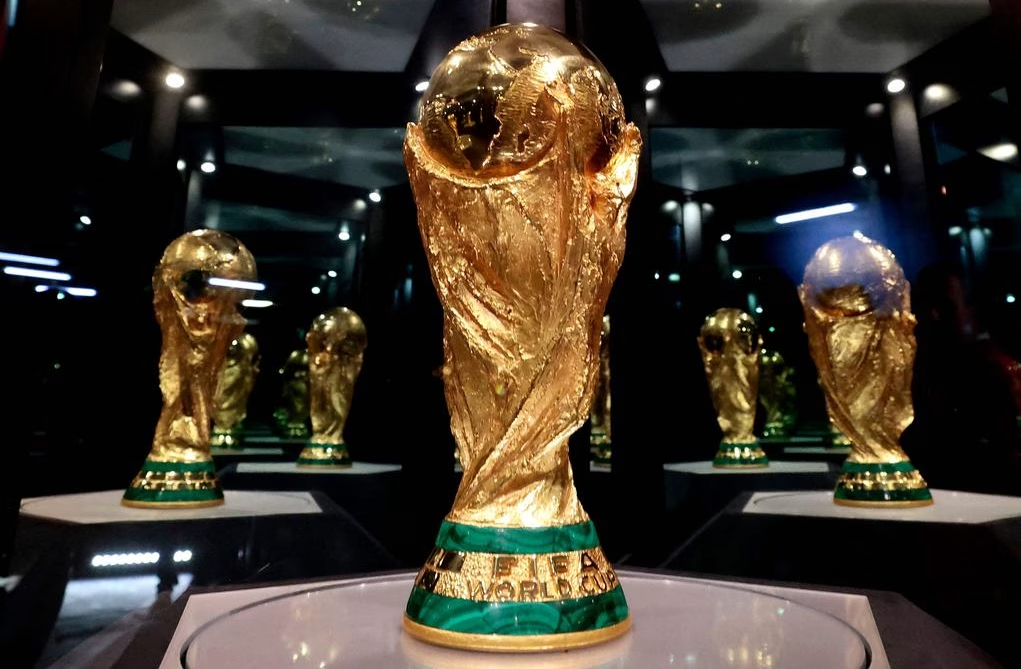
The most comprehensive FIFA World Cup 2026 safety guide you'll find anywhere. The tournament is the largest sporting event in human history — 48 teams, 104 matches, 16 host cities across the United States, Mexico, and Canada, over 39 days of football. More than six million tickets sold. And, by FIFA's own forecasts, somewhere in the order of five to six million international visitors crossing borders, queuing through customs, navigating unfamiliar transit systems, and standing shoulder-to-shoulder with strangers in stadiums, fan zones, and city squares.
A tournament this big, spread across this much geography, is a logistical achievement. It is also, by definition, a safety challenge.
Travel Smart will be monitoring all 16 host cities, 24/7
At Travel Smart, we'll be monitoring every host city, every match day, and every emerging threat for the entire 39 days of the tournament — 24 hours a day, in real time, through our TGuard 24/7 intelligence network. Severe weather, transport disruption, crime hotspots, terror threats, civil unrest, stadium-area road closures: if it could affect your trip, we'll know about it, and our subscribers will know within minutes through push notifications direct to their phones.
This is the most comprehensive English-language safety and logistics guide to the World Cup 2026 you'll find anywhere. It draws on official advisories from the US Department of State, the UK Foreign, Commonwealth & Development Office, Global Affairs Canada, the Australian Government's Smartraveller, FIFA's own published guidance, and direct sources from each of the sixteen host cities' transit authorities. We've stripped out the marketing fluff and kept the practical, verifiable, actionable detail.
Use the table of contents to jump to your destination, or read it through cover to cover before you fly.
1Tournament overview & format
The basics, so we're all working from the same map.
Quick facts
- Dates: 11 June – 19 July 2026 (39 days).
- Format: 48 teams in 12 groups of four. Top two from each group plus the eight best third-placed teams advance. 104 matches in total — 72 group-stage and 32 knockout.
- Host countries: United States (11 cities, 78 matches), Mexico (3 cities, 13 matches), Canada (2 cities, 13 matches).
- Opening match: Mexico v South Africa, Estadio Azteca (rebranded "Mexico City Stadium" for the tournament), 11 June.
- Final: 19 July, MetLife Stadium ("New York/New Jersey Stadium"), East Rutherford, New Jersey.
- All knockout rounds from the quarter-finals onwards are played in the United States.
FIFA has organised the host cities into three regional clusters to minimise travel time for teams and fans:
Western
Vancouver · Seattle · San Francisco Bay Area · Los Angeles
Central
Guadalajara · Mexico City · Monterrey · Houston · Dallas · Kansas City
Eastern
Atlanta · Miami · Toronto · Boston · Philadelphia · New York/New Jersey
If you're following one team through the group stage, the regional cluster matters: it will likely be where most of your travel happens. If you're following the knockout rounds, plan for the eastern half of North America.
A note on stadium names
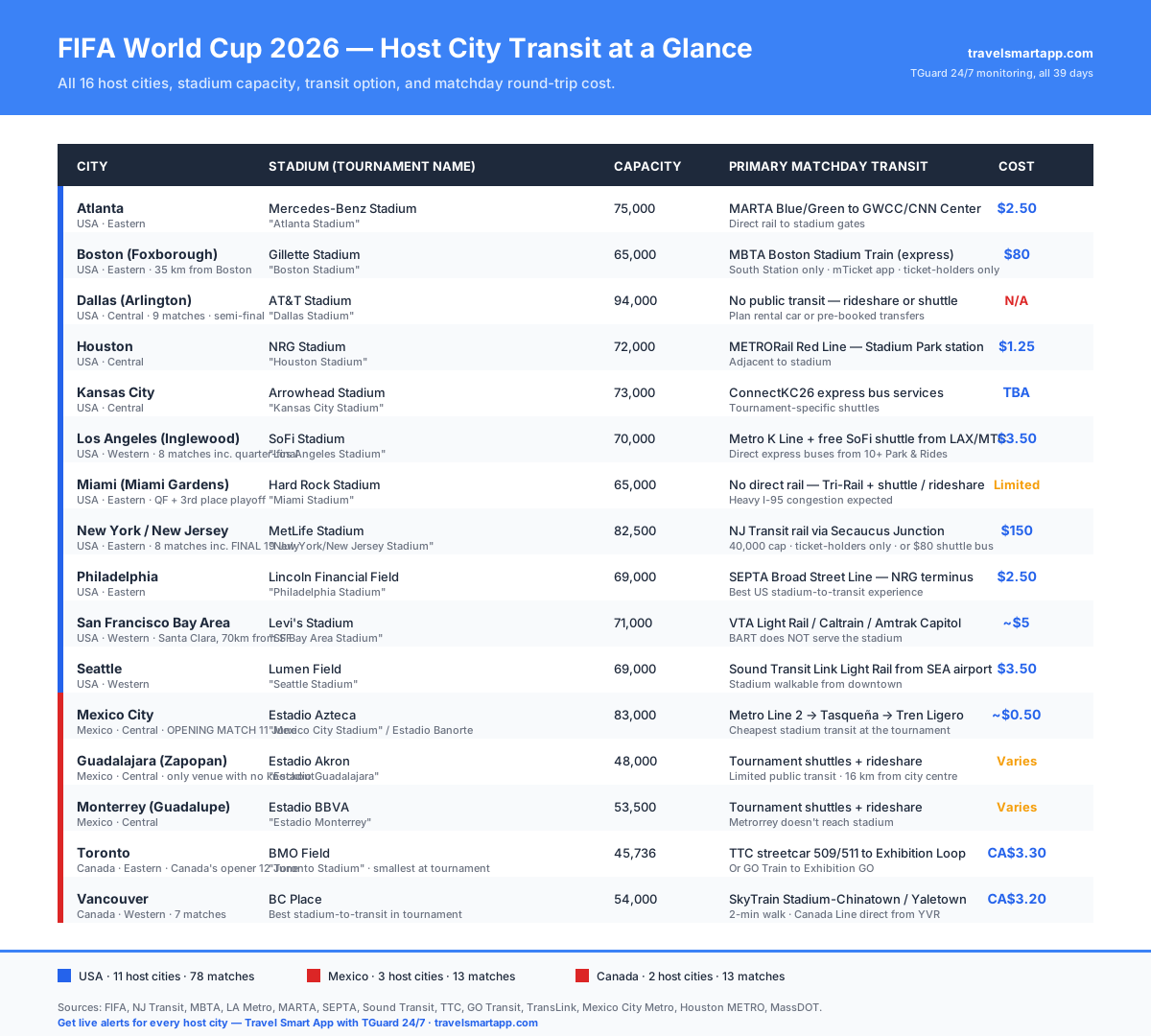
FIFA's strict policy on corporate sponsorship means many stadiums will be rebranded for the tournament. Mercedes-Benz Stadium becomes "Atlanta Stadium". Gillette Stadium becomes "Boston Stadium". MetLife Stadium becomes "New York/New Jersey Stadium". And so on. We've used both names throughout this guide so you can match what's on your ticket to what locals call the place.
2The big picture: country-level safety snapshot
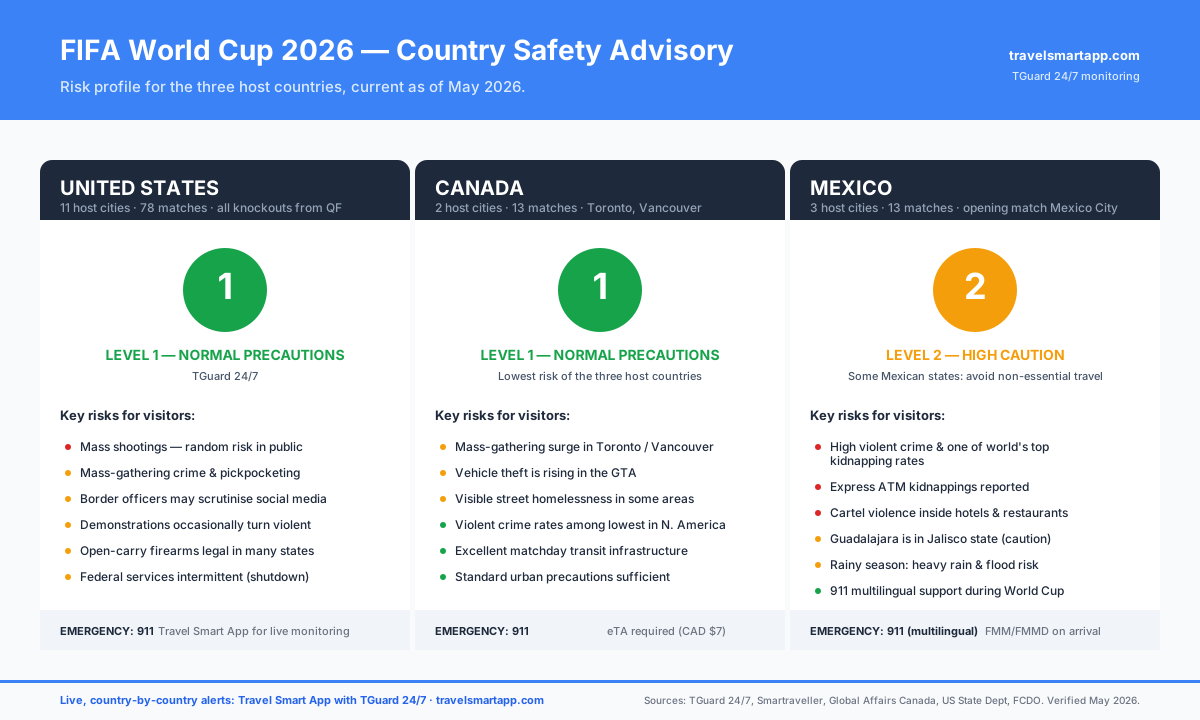
Each of the three host countries has its own risk profile. Knowing that profile before you arrive is the single most important piece of preparation you can do.
United States
Level 1 · Normal precautionsAmong the safest destinations on paper, but mass-shooting risk, mass-gathering hazards and tightened border scrutiny make practical preparation essential.
Canada
Level 1 · Normal precautionsBy every credible metric the safest of the three host countries. Standard crowd-safety precautions still apply during the tournament surge.
Mexico
Level 2 · High cautionRisk varies dramatically by state. Tourist zones in Mexico City, Monterrey and Guadalajara remain workable — but planning is non-negotiable.
United States
The official advisory from the Australian Government's Smartraveller is Level 1 — Exercise normal safety precautions, the lowest of four risk levels. The Government of Canada similarly rates the US at "take normal security precautions". On paper, then, the US is among the safest destinations in the world for foreign travellers.
In practice, the picture is more nuanced. The risks travellers should be aware of include:
Mass-casualty incidents. Mass shootings occur across the United States, and while tourists are rarely the direct targets, the risk of being in the wrong place at the wrong time is real. Many US states permit the open or concealed carry of firearms. The Department of Homeland Security maintains a National Terrorism Advisory System that publishes alerts about credible threats; subscribe to it before and during your trip.
Mass-gathering risks. Crowds at stadiums, fan zones, and transit hubs are themselves a hazard — stampedes, pickpocketing, scams, and opportunistic violence all spike during major events. This is the single biggest practical risk for World Cup attendees.
Political demonstrations and civil unrest. Demonstrations can occur at short notice and occasionally turn violent. Smartraveller's standing guidance: avoid them, monitor local media, follow police instructions.
Border and entry scrutiny. US border officers have broad discretion to deny entry, and travellers have been refused or detained over the contents of their phones, social media posts, or perceived political views. Smartraveller specifically warns Australians not to comment on local US political events on social media before or during travel.
Federal government services may be intermittent. As of February 2026, the US federal government entered a partial shutdown that affected airport services, including longer wait times at customs and security. Check the status before you fly, and pad your connection times.
Legal differences vary by state. Some states apply the death penalty for serious crimes, including federal offences; some have laws that may affect LGBTQIA+ travellers (there is no federal anti-discrimination protection). Research the laws of any state you'll spend significant time in.
Canada
Smartraveller and the equivalent international advisories rate Canada at the lowest level of risk — exercise normal safety precautions. Canada is, by every credible metric, the safest of the three host countries. Violent crime rates in Toronto and Vancouver are a fraction of those in the comparable US host cities.
That said, mass-gathering risks apply equally in Canada. Toronto's central waterfront and Exhibition Place will see crowds in the tens of thousands daily, and Vancouver is expecting four weeks of sustained surge demand on its transit network. Standard precautions — secure your bag, watch for pickpockets in crowds, don't flash valuables, plan your transit ahead — apply with the same force as anywhere else.
Mexico
Mexico is the host country where safety planning matters most. Smartraveller's overall advisory level is Level 2 — Exercise a high degree of caution due to the threat of violent crime. The Government of Canada is more direct: high levels of violent crime, one of the highest kidnapping rates in the world, and a security situation that "could deteriorate rapidly".
The headline numbers obscure two important nuances:
Risk varies dramatically by state. Smartraveller advises "reconsider your need to travel" to Chihuahua, Sinaloa, Guanajuato, Sonora, Colima, and Chiapas. The Canadian government adds Jalisco, Guerrero, and Michoacán to that list. One of the World Cup host cities — Guadalajara — is in Jalisco state, although both governments specifically exempt the Guadalajara metropolitan area from the avoid-travel advisory if you stay in the central tourist zones. The country's other host cities, Mexico City and Monterrey, are not subject to elevated state-level advisories.
Recent volatility. In February 2026, the killing of Nemesio "El Mencho" Oseguera Cervantes — head of the Jalisco New Generation Cartel — triggered a wave of cartel reprisal violence across multiple Mexican states. Roadblocks, vehicle burnings, and shootouts with security forces were reported. The acute phase passed by mid-March, but the underlying instability remains. Both Smartraveller and Global Affairs Canada warn that the security situation can change quickly, and shelter-in-place orders have been issued in some states with little notice.
Mexico-specific risks World Cup travellers should know about
- Express kidnappings, where victims are forced at gunpoint to withdraw cash from ATMs — reported in tourist zones including Guadalajara and Mexico City.
- Cartel-related incidents inside hotels, restaurants, and nightclubs — even in well-policed tourist neighbourhoods.
- Sexual assaults against foreign women, including at beach resorts. Reported by both the Canadian and US governments as ongoing risks.
- The rainy season (May–November) overlaps the entire tournament. Heavy rain and localised flooding can disrupt transport with little notice.
None of this means Mexico should be avoided. The country has hosted two previous World Cups, the matchday infrastructure works, and the football culture is unmatched in the Americas. But the risk profile is genuinely different from the US and Canada, and your preparation needs to reflect that.
3Visas, entry, and the FIFA PASS
Holding a World Cup ticket does not, in itself, give you the right to enter any of the host countries. Border officers in all three countries have the final say. Get your paperwork right early.
Entering the United States
The US distinguishes between Visa Waiver Program (VWP) countries and everyone else.
VWP / ESTA. If you hold a passport from one of the roughly forty VWP countries — Australia, the United Kingdom, New Zealand, Japan, Singapore, South Korea, and most EU member states are on the list — you can enter the US for tourism on an ESTA (Electronic System for Travel Authorization). Apply online before you fly; approval is usually fast but can take up to 72 hours; the authorisation is valid for two years and multiple entries; each visit may be up to 90 days. The ESTA fee at time of writing is USD $21.
B1/B2 visitor visa. If your country isn't on the VWP list, you'll need a B1/B2 visitor visa. This is a much longer process: an online DS-160 application, biometric enrolment, an in-person consular interview, and document review.
FIFA PASS — priority visa interviews. In November 2025, the US Department of State and FIFA jointly launched the FIFA Priority Appointment Scheduling System (FIFA PASS). If you bought your match ticket directly from FIFA (not through a reseller), you can opt in via your FIFA.com account to get a prioritised B1/B2 interview slot. The system went live in early 2026 and is designed for travellers in countries with long visa-interview backlogs. It does not increase your chances of approval — it just speeds up the wait for the interview itself. FIFA PASS appointments are also available for spouses and minor children, but only if they accompany the ticket holder to the interview.
Important caveats
- Presidential Proclamation 10998 suspends or limits visa issuance for nationals of 39 countries. There is an exception for athletes, team support staff, media, and their immediate relatives — but not for fans or spectators, even those with FIFA PASS access. If you're a national of an affected country, check your eligibility before you buy a ticket.
- A visa or ESTA does not guarantee entry. US Customs and Border Protection has broad statutory powers to find a traveller "inadmissible" for any reason. Pack supporting documents — return ticket, accommodation booking, match ticket — in case of secondary inspection.
- Passport validity. Most visitors must hold a passport valid for at least six months beyond the intended period of stay, unless your country is on the limited list of exempt nations.
Enrol in STEP. The US State Department's free Smart Traveler Enrollment Program sends email alerts for the destinations you've registered. Sign up before you travel.
Entering Canada
Electronic Travel Authorization (eTA). If you're a citizen of a visa-exempt country (Australia, the UK, most of the EU, and many others), you need an eTA to fly into Canada. It costs CAD $7, takes minutes online, and is valid for up to five years or until your passport expires.
Visitor Visa. Citizens of countries not on the visa-exempt list need a Temporary Resident Visa (TRV), applied for through Immigration, Refugees and Citizenship Canada (IRCC).
Dual citizens. If you hold both Canadian and another nationality, you must enter Canada on your Canadian passport — you are not eligible for an eTA and cannot use a foreign passport for air entry.
Entering Mexico
For most Western nationalities — Australia, the US, Canada, the UK, and most of the EU — Mexico does not require a tourist visa for stays of up to 180 days. What you do need is an immigration form completed at the border:
- By air: the FMMD (Forma Migratoria Múltiple Digital), completed online on or before arrival.
- By land: the older paper-based FMM, completed at the border crossing.
Keep your stamped FMM or FMMD with you at all times during your stay — Mexican immigration officials may ask to see it at internal checkpoints, and you'll need it to leave the country. If you lose it, you'll have to pay for a replacement.
Dual citizens (Mexican and Australian, for example) must enter and exit Mexico as Mexican citizens, carrying both passports.
A note on connecting borders
The 2026 World Cup is the first in which a single fan trip might cross three international borders. If you're planning to follow a team across the regional cluster, each border crossing is a fresh opportunity for delays, scrutiny, and refused entry. Multi-country itineraries should build in slack — don't book a flight from Toronto to Mexico City five hours after a match in Boston.
4Tickets, scams, and the FIFA app
Every safety guide for a major sporting event eventually reaches the same conclusion: the most likely thing to ruin your trip isn't violent crime or a terror attack. It's a fake ticket. Or an Airbnb that doesn't exist. Or a dodgy currency exchange. Here's how the World Cup 2026 ticketing system works, and how to avoid the scams.
The ticketing system in plain English
- All tickets are sold in advance. No tickets will be available at stadium gates on match day. Don't believe anyone who tells you otherwise.
- All tickets are digital, delivered through the official FIFA World Cup 2026 app & website. Printed copies and screenshots may be rejected at the gate.
- Each ticket is linked to the purchaser's identity. ID may be checked on entry.
- The only authorised sources for tickets are FIFA's official ticketing portal and FIFA's authorised resale platform. Anything else — Facebook Marketplace, Twitter/X DMs, classifieds, "VIP package" websites you've never heard of — is high-risk for fraud.
Common ticket scams to know about
- Convincing fake tickets. Counterfeits can look real until they're scanned at the gate. By then, you're refused entry, you've been pickpocketed of your face value, and the seller is unreachable. Smartraveller's advice is unambiguous: tickets sold on unofficial resale sites, social media, or third-party vendors are likely fake.
- Phantom tickets. Money taken, ticket never delivered. The FIFA Customer Support team has no jurisdiction over third-party sales, so there's no recourse.
- "Hospitality package" upsells. Unscrupulous resellers bundle a fake ticket with hotel and transfer arrangements that also turn out to be fake. The official FIFA hospitality programme is the only legitimate package option.
- FIFA PASS visa scams. If someone offers to "guarantee" you a US visa interview through FIFA PASS for a fee on top of the ticket price, it's a scam. FIFA PASS is a free opt-in for ticket holders.
Accommodation scams
The other huge fraud vector is accommodation. With six million ticket holders and a finite hotel supply, prices are surging and supply is tight. Smartraveller's specific guidance: only use travel providers with a good reputation. Be cautious giving personal details to unknown sources.
- Stick to major booking platforms (Booking.com, Expedia, Airbnb, Hotels.com) with strong refund and dispute protection.
- Read the reviews. Properties with no review history at premium prices in tournament cities are red flags.
- Be deeply suspicious of "off-market" listings offered through social media or DM.
- Pay by credit card, never bank transfer. A credit card chargeback is your safety net.
- Book early. The Government of Canada's specific guidance on the World Cup is: "Don't plan on finding a place to stay after you arrive."
What to download before you fly
- The official FIFA World Cup 2026 app (required to display your match ticket).
- The FIFA Fan Info WhatsApp Channel (real-time travel and matchday updates from FIFA).
- Your destination country's official travel-advisory app or service — STEP for the US, Smartraveller subscription for Australians, the equivalent service for your home country.
- The Travel Smart App, with TGuard 24/7 alerts enabled. (We have a dedicated section on this at the end of the guide. If you only download one app, make it ours — it's the one designed for this exact use case.)
5What to expect on a match day
Every World Cup veteran will tell you the same thing: the match itself is only a fraction of the matchday experience. The hours before kickoff and the hours after the final whistle are where most of the friction — and most of the risk — sits.
The five-hour rule
For every World Cup match, treat the day like an international flight: arrive at the stadium two to three hours before kickoff, and budget another two to three hours of travel time on top of that. Five hours from your hotel front door to your seat is a sensible target. Smartraveller's official guidance is to arrive 2–3 hours before kickoff to account for security checks, transport surge, and road closures.
Why so long?
- Security screening at every stadium will be airport-style. Bags will be searched. Each stadium publishes its own code of conduct (what you can bring) — read it before you leave the hotel.
- Transit surge. Many host cities are running matchday-only services or restricting normal transit (more on this in the city-by-city sections). Trains will run at capacity; queues will be long.
- Road closures. Local authorities may close roads around stadiums hours before kickoff. Driving and rideshare are unreliable on matchday for many venues.
- Last-minute ticket and ID checks. Your ticket is linked to your identity; bring the same ID you used to buy the ticket.
Crowd safety
Mass-gathering risk is the single most important hazard on a match day. Smartraveller flags accidental injury — including stampedes — as a real risk in dense crowds. Practical advice:
- Identify exits as soon as you reach your section. If a crowd surges, you want to know your route out before you need it.
- Don't push back against a moving crowd. Move with it, then peel off sideways when you can.
- Stay sober enough to make decisions. Pre-match drinking is part of football culture; getting blackout-drunk in a foreign city you don't know isn't a strategy.
- Travel in groups of two or more if you can. Agree a meet-up point in advance in case you get separated.
Crime in crowds
Pickpockets, scammers, and opportunistic thieves work major sporting events professionally. The patterns are predictable:
- Distraction theft. A "spilled" drink, a dropped phone, a stranger asking for help with directions — and a partner lifting your wallet.
- Bag-snatch and run. Common at transit hubs and stadium entrances. Wear your bag in front of your body.
- Fake police. People in semi-official uniforms asking to see your wallet or ID "for security checks". Real officers don't do this.
- ATM skimming and card cloning. Use ATMs inside banks, not standalone street ATMs. Cover the keypad. Check your card statements daily during the trip.
After the final whistle
The hours after a match are when fatigue, alcohol, and crowd density combine into real risk. Stay on your guard until you're back in your hotel.
- Don't rush for the exits. Let the initial crush dissipate. Stadiums are designed to evacuate quickly; the bottleneck is usually outside, not inside.
- Have a transit plan B. Trains go down. Roads close. Always know two ways back to your hotel.
- Watch for surge pricing. Rideshare prices spike massively after big matches. Public transit, even when crowded, is usually a better choice if it's running.
6City-by-city guide: USA
Eleven host cities, seventy-eight matches. Here's the practical safety, transit, and stadium information you need for each.
Atlanta — Mercedes-Benz Stadium ("Atlanta Stadium")
State / safety profile: Georgia. Standard US safety profile. Atlanta has higher overall violent crime rates than the national average but the downtown stadium district and Midtown — where most visitors stay — are well-policed, especially during major events.
Getting to the stadium. Atlanta is one of the easiest stadium-transit experiences of the tournament. Mercedes-Benz Stadium sits in downtown Atlanta, immediately next to a MARTA rail station. The GWCC/CNN Center station (now also signed as Vine City) on MARTA's Blue and Green lines drops you steps from the stadium entrance. From Hartsfield-Jackson Atlanta International Airport (one of the world's busiest), MARTA's Red and Gold lines connect to downtown in roughly 20 minutes for a flat fare of $2.50. If you stay downtown — and you should — you may not need transit at all. The walk from most downtown hotels to the stadium is under 15 minutes.
Where to stay. Downtown Atlanta or Midtown. Both are MARTA-connected and walkable.
Fan zone. Centennial Olympic Park, the legacy site of the 1996 Olympics, will host the main fan festival.
Local risks. Petty theft and panhandling around downtown transit stations after dark. Standard precautions; don't flash valuables.
Boston — Gillette Stadium ("Boston Stadium")
The big logistical fact
Gillette Stadium is in Foxborough, Massachusetts — about 35 km south of Boston. This single fact dominates the entire matchday plan.
Getting to the stadium. This is the most operationally complex transit setup of any US host city. The MBTA — Boston's regional transit authority — is running dedicated "Boston Stadium Train" express services from South Station in downtown Boston direct to Foxboro Station, which sits next to the stadium.
- Tickets are USD $80 round-trip, sold exclusively through the MBTA's mTicket app.
- You must hold a same-day match ticket to buy a Boston Stadium Train ticket.
- There is no other MBTA service to Gillette Stadium. The regular subway and bus network does not reach Foxborough. The Stadium Train is the only public rail option.
- 14 express trains per match, each carrying about 1,400 passengers — total capacity of around 20,000 per match.
- The last train arrives at Foxboro Station roughly 90 minutes before kickoff. Plan accordingly.
- A Stadium Train ticket also acts as a same-day pass for the entire MBTA Commuter Rail network — useful if you're staying outside central Boston.
A separate Boston Stadium Express bus service runs from more than 20 locations across Massachusetts and Rhode Island for a slightly higher fare of $95 round-trip.
Driving is essentially not an option unless you have a pre-paid match-day parking reservation; non-ticket holders will be turned away from all parking near the stadium.
Where to stay. Central Boston, with access to South Station — Back Bay, Downtown, or Cambridge with a quick subway connection. Staying in Foxborough itself is impractical for non-ticket holders.
Local risks. Boston is one of the safest large US cities. Standard precautions. The city is also hosting its 250th anniversary celebrations and Sail Boston 2026 during the tournament — expect crowds at City Hall Plaza (the official Fan Festival site) on top of normal World Cup density.
Dallas — AT&T Stadium ("Dallas Stadium")
The big logistical fact
AT&T Stadium is in Arlington, Texas, between Dallas and Fort Worth — and Arlington famously has no public transport. None. The DART rail system that serves Dallas does not reach Arlington.
Getting to the stadium. Without a rental car or rideshare, your options are limited. Arlington's on-demand microtransit service "Via Arlington" is not designed for 94,000-fan events. Expect rideshare surge pricing on a scale you've never seen before — three-figure one-way fares are realistic. Plan well in advance: organised match-day shuttle services from downtown Dallas and Fort Worth hotels are likely the best option. If you're attending matches in Dallas, factor a rental car or pre-booked transfers into your budget.
Climate. Dallas in June and July is brutal — temperatures regularly exceed 38°C / 100°F. The stadium's air conditioning matters; outside it, hydrate aggressively.
Where to stay. Downtown Dallas or Fort Worth, with a pre-arranged matchday shuttle. Hotels in Arlington itself are limited and book out very early for events at AT&T Stadium.
Local risks. Standard. Texas permits open carry of firearms in many public settings. Heat illness is the dominant practical risk.
Houston — NRG Stadium ("Houston Stadium")
Getting to the stadium. Houston's METRORail Red Line stops at Stadium Park / Astrodome station, immediately next to NRG Stadium. The line runs north into downtown Houston. Houston's transit network is patchier than many US peers, but the stadium itself is well-served. From George Bush Intercontinental Airport, transfer is by bus or rideshare — there is no direct rail link.
Climate. Like Dallas, brutal heat and high humidity. The stadium roof helps; the walk to and from the station does not. Hydrate.
Where to stay. Downtown Houston or the Texas Medical Center area, both with direct METRORail access to the stadium.
Local risks. Standard US precautions. Houston has flooding risk during the rainy season; check forecasts.
Kansas City — Arrowhead Stadium ("Kansas City Stadium")
Getting to the stadium. Arrowhead Stadium is in eastern Kansas City, Missouri, off Interstate 70. There is no rail link. The local KCATA bus network is launching enhanced ConnectKC26 services for the tournament, with stadium-bound express routes. Kansas City has also confirmed no fare increases for World Cup transit.
Where to stay. Downtown Kansas City (Power & Light District) or the Country Club Plaza area, both connected to the stadium by tournament express bus services.
Local risks. Standard. Kansas City has higher property crime rates than the US average; secure your hotel valuables.
Los Angeles — SoFi Stadium ("Los Angeles Stadium")
The big logistical fact
SoFi Stadium is in Inglewood, near LAX airport, and the I-405 traffic on match days is among the worst in the United States.
Getting to the stadium. LA Metro — alongside more than ten regional transit partners — is operating a multi-pronged matchday transit plan.
- Metro K Line (Crenshaw/LAX Line) has a Downtown Inglewood station approximately a 10–20 minute walk from SoFi (a mile and a half by foot). This is the closest direct rail option.
- LAX/Metro Transit Center (a major hub that opened in 2025) connects the Metro C and K lines, with a free SoFi Shuttle running on match days direct to the stadium.
- Direct express buses from over a dozen Park & Ride locations across LA County, including Hawthorne/Lennox Station, El Camino College Torrance, Pierce College, and North Hollywood. Each digital parking pass includes fare for three people. Service starts up to 4 hours before kickoff.
- Standard Metro fare is $1.75 one-way / $3.50 round-trip — among the cheapest stadium transit in the tournament.
Avoid driving unless you've pre-booked official parking ($250–$300 per match). The I-405 is a parking lot for hours either side of kickoff.
Where to stay. Anywhere on the Metro K, C, or E lines with shuttle access. Santa Monica, Downtown LA, Culver City, and Hollywood all work. Avoid airport-area hotels for sightseeing — they're convenient for the stadium but a long ride from anything else.
Local risks. Standard. Inglewood and the surrounding areas have higher property crime than west-side LA; don't leave valuables in cars overnight at Park & Ride lots.
Miami — Hard Rock Stadium ("Miami Stadium")
The big logistical fact
Hard Rock Stadium is in Miami Gardens, about 25 km north of downtown Miami and Miami Beach. It is not on the city's Metrorail system.
Getting to the stadium. Public transit options are limited — Miami's Metrorail does not reach Hard Rock Stadium. Tri-Rail (regional commuter rail) runs to nearby Hialeah, with shuttle bus connections on event days. Most fans drive or use rideshare. Expect heavy congestion on I-95 and the Florida Turnpike on match days.
Climate. Miami in June and July is hot, humid, and prone to afternoon thunderstorms. Hurricane season starts 1 June; large storms can ground flights and disrupt transit.
Where to stay. Miami Beach, Brickell, or Downtown Miami for the city experience; hotels closer to Aventura or Sunny Isles for stadium access. Rideshare or rental car will be your default.
Local risks. Standard US precautions. Miami's nightlife districts (South Beach, Brickell) have elevated rates of credit-card fraud, drink-spiking, and bar overcharging — be alert at clubs and tourist bars.
New York / New Jersey — MetLife Stadium ("New York/New Jersey Stadium")
The big logistical fact
MetLife Stadium is in East Rutherford, New Jersey — across the Hudson River from Manhattan. The area is hostile to pedestrians and walking to the stadium is not a viable option; the surrounding roads have no safe pedestrian routes from the wider region.
Getting to the stadium. The transit operation here is the most complex of any World Cup venue. Read this carefully.
- The only ways to reach MetLife on match day are: NJ Transit rail, the official Stadium Shuttle buses, rideshare to the designated drop-off zone, or pre-paid premium parking at American Dream. Walking is not a viable option. There is no general spectator parking on stadium property.
- NJ Transit rail tickets are USD $150 round-trip, sold exclusively through the NJ Transit mobile app. Only 40,000 rail tickets will be sold per match. They are non-transferable, non-refundable, and only available to confirmed match ticket holders.
- All rail trips go via Secaucus Junction, where you transfer to a matchday-only train (the BetMGM Meadowlands Rail Line) to the stadium. From New York City — including all five boroughs — you must board at Penn Station New York. From New Jersey, you board at your origin station and transfer at Secaucus.
- Beginning four hours before kickoff, NJ Transit rail service between Penn Station and Secaucus is restricted to ticket holders only. Regular commuters get free transfers to alternative services (PATH train from 33rd Street, NJ Transit buses from Port Authority).
- Bus tickets from Port Authority Bus Terminal in Manhattan or the New Jersey park-and-ride site at Hackensack Meridian School of Medicine are USD $80 round-trip.
- Rideshare drop-off is at the Meadowlands Racing & Entertainment site, with a walk to the stadium gates.
- Parking is extremely limited. The American Dream Mall offers paid parking at $225 per space, with shuttle access.
The total trip from Manhattan via Penn Station, Secaucus Junction, and the Meadowlands Rail Line takes approximately 45–60 minutes plus security and queueing time. Plan to leave Manhattan four hours before kickoff for any match.
Where to stay. Manhattan offers world-class everything but you'll pay a premium during the final. Jersey City and Hoboken are PATH/NJ Transit-connected, often cheaper, with very fast access to Secaucus Junction.
Local risks. New York is statistically among the safest major US cities for tourists; subway crime rates have ticked up post-pandemic, particularly on late-night services. Standard urban precautions apply. The risk profile around MetLife on match days is dominated by mass-gathering and transit-surge issues, not crime.
Philadelphia — Lincoln Financial Field ("Philadelphia Stadium")
Getting to the stadium. Philadelphia is the cleanest stadium-transit story in the entire United States. SEPTA's Broad Street Line subway runs straight from Center City directly to NRG station, the line's southern terminus, located inside the South Philadelphia Sports Complex — a five-minute walk from Lincoln Financial Field. SEPTA is running enhanced match-day services at no additional fare; the federal government has covered most of the operating cost. Round-trip subway fare is around $5.
From Philadelphia International Airport (PHL), the SEPTA Airport Line runs to Center City, where you transfer to the Broad Street Line. Total airport-to-stadium time is around 45 minutes.
Where to stay. Centre City, along the Broad Street Line. Old City, University City, or the Avenue of the Arts all work.
Local risks. Standard US urban precautions. Some neighbourhoods around the sports complex are quieter at night; stay close to major transit stops after the match.
San Francisco Bay Area — Levi's Stadium ("San Francisco Bay Area Stadium")
The big logistical fact
Levi's Stadium is in Santa Clara, about 70 km south of San Francisco — closer to San Jose than to the city most international visitors think of as "the Bay Area".
Getting to the stadium. BART, the Bay Area's principal regional metro system, does not serve Levi's Stadium. Your options:
- VTA Light Rail to Santa Clara — Great America station, immediately adjacent to the stadium.
- Caltrain (commuter rail from San Francisco) to Mountain View, then VTA bus or light rail.
- Amtrak Capitol Corridor to Santa Clara — Great America station.
From San Francisco International Airport (SFO), the practical route is BART to Millbrae, then Caltrain south. Allow 90 minutes airport to stadium.
Where to stay. San Jose for stadium proximity; San Francisco for everything else, with Caltrain access. Avoid Oakland's deeper east-side neighbourhoods if you're unfamiliar with the city.
Local risks. San Francisco's downtown has well-documented street homelessness and open drug use, particularly around the Tenderloin and parts of SoMa. Avoid wandering into the Tenderloin at night. Vehicle break-ins are common across the Bay Area — never leave anything visible in a parked car.
Seattle — Lumen Field ("Seattle Stadium")
Getting to the stadium. Seattle is one of the easiest matchday transit stories in the tournament. Sound Transit's Link Light Rail has a stop at International District / Chinatown station, immediately next to Lumen Field. The Link runs directly from Seattle-Tacoma International Airport (SEA) to the stadium in about 35 minutes for $3.50. From downtown hotels, Lumen Field is walkable.
Where to stay. Downtown Seattle or Capitol Hill, both connected by Link Light Rail.
Local risks. Seattle has experienced increased property crime and a visible street-homelessness presence in some downtown areas. Standard urban precautions.
7City-by-city guide: Mexico
Three host cities, thirteen matches, and the highest baseline safety threshold of the tournament. Read this section carefully.
Mexico City — Estadio Azteca ("Mexico City Stadium")
Historic significance
The only stadium ever to host three World Cups (1970, 1986, 2026). Site of the 1970 and 1986 finals, Pelé's last World Cup, and Maradona's "Hand of God" and "Goal of the Century".
Getting to the stadium. Estadio Azteca is in the Coyoacán district of southern Mexico City, about 13 km from the city centre. The recommended public-transport route:
- Metro Line 2 (Blue Line) to Tasqueña, then transfer to the Tren Ligero (Light Rail) southbound to Estadio Azteca station — a five-minute walk to the stadium.
- Total journey from central neighbourhoods (Roma, Condesa, Polanco): 45–60 minutes.
- Fares are minimal — Metro is 5 pesos (about USD $0.30); the Tren Ligero is 3 pesos.
- Many Mexico City Metro trains have two pink cars at the front reserved for women and children under 12. This is for safety reasons; respect the policy.
- Driving and rideshare are strongly not recommended on match days. Mexico City's traffic is among the world's worst, and matchday road closures around the stadium make it materially worse. Allow 90+ minutes for any rideshare trip.
Climate. June and July are Mexico City's rainy season. Highs around 25–26°C / 77–78°F with afternoon and evening thunderstorms. Pack a waterproof layer for every match. The city sits at 2,240 metres / 7,350 feet above sea level — the highest of any World Cup stadium ever. Allow at least 48 hours to acclimatise; pace yourself with alcohol, hydrate, and avoid heavy exercise the first day.
Where to stay. Roma Norte, Condesa, or Polanco — the safest, most cosmopolitan neighbourhoods, all with strong Metro access. Avoid central Tepito and Iztapalapa.
Local risks. Mexico City overall is among the safer parts of Mexico, but specific risks include:
- Express kidnappings, particularly involving rideshare drivers operating off-app or unregistered taxis. Use only registered taxis from official ranks (sitio taxis), Uber, or Didi via the apps. Never flag a taxi from the street.
- ATM fraud and skimming. Use ATMs inside banks and avoid street ATMs after dark.
- Pickpocketing on the Metro, particularly Lines 1, 2, and B.
- Drink-spiking in some bars in tourist areas. Watch your drink.
- Counterfeit currency is in wide circulation. Get cash at major banks or hotels, not on the street.
Guadalajara — Estadio Akron ("Estadio Guadalajara")
State-level advisory
Located in Jalisco state. Both the Australian and Canadian governments advise against non-essential travel to Jalisco overall, but specifically exempt Guadalajara and Puerto Vallarta from that advisory if you stick to central tourist zones.
Getting to the stadium. Estadio Akron is in Zapopan, the western suburb of Guadalajara, about 16 km from the city centre. Public transit options are limited; expect to use rideshare or a taxi. Guadalajara's Mi Macro Periférico bus rapid transit serves parts of the area, and stadium-area shuttles are likely to operate on match days. Allow 60–90 minutes from central Guadalajara on a match day.
Climate. Hot and humid, with rainy-season storms. Highs around 28°C / 82°F.
Where to stay. Zona Centro (Centro Histórico), Chapultepec, or Providencia — central, walkable, well-policed neighbourhoods. Avoid the city's outer suburbs and the area around the bus station after dark.
Local risks. Guadalajara is the home of the Jalisco New Generation Cartel (CJNG), and the post-El Mencho violence in February–March 2026 originated here. The acute phase has passed, but specific cautions for World Cup visitors:
- Avoid driving outside the urban core. Cartel roadblocks have occurred on highways into and out of Guadalajara.
- Express kidnappings and ATM fraud have been reported in tourist areas; use only registered taxis and apps.
- Reports of assaults on foreign women, including in tourist neighbourhoods. Travel in groups at night.
- The cartel violence inside hotels and restaurants flagged by Smartraveller and Global Affairs Canada is real but rare; it's worth being aware that your hotel choice and where you eat does shift your risk profile.
Monterrey — Estadio BBVA ("Estadio Monterrey")
State-level advisory: Nuevo León state, not on the avoid-travel list. Generally regarded as one of Mexico's safer business-traveller destinations, although cartel-related violence has occurred.
Getting to the stadium. Estadio BBVA is in Guadalupe, a suburb of Monterrey, about 12 km east of the city centre. Monterrey's Metrorrey line runs through the metropolitan area but does not directly serve the stadium. Tournament-specific shuttle services and rideshare will be the main matchday options. Allow 45–60 minutes from central Monterrey.
Climate. Hot and dry — Monterrey regularly hits 35–40°C / 95–104°F in June and July. Hydrate aggressively and protect yourself from sun exposure.
Where to stay. San Pedro Garza García (the upscale district where many international hotel chains operate) or central Monterrey near Macroplaza. San Pedro is the safest district in the metropolitan area.
Local risks. Standard Mexican urban precautions plus heat. Express kidnappings and ATM fraud are reported. Stay away from the deeper outer suburbs at night.
8City-by-city guide: Canada
Canada's two host cities offer the lowest baseline safety risk of the tournament, with arguably the cleanest matchday transit experiences too.
Toronto — BMO Field ("Toronto Stadium")
Getting to the stadium. BMO Field is at Exhibition Place, on the central waterfront about 4 km west of downtown Toronto. The transit options are exceptional:
- TTC streetcars 509 (Harbourfront) and 511 (Bathurst) run from Union Station directly to Exhibition Loop, the streetcar terminus immediately at the stadium gates. Journey time about 15–20 minutes.
- GO Transit to Exhibition GO station — adjacent to the stadium and to the Fort York Fan Festival. Ten minutes from Union Station, with enhanced GO service confirmed for all six match days.
- UP Express runs every 15 minutes from Toronto Pearson International Airport (YYZ) to Union Station — direct connect from the airport is around 25 minutes.
The City of Toronto has released a published mobility plan that explicitly prioritises transit and pedestrian access on match days, with traffic restrictions on roads near Exhibition Place and the Gardiner Expressway. Driving is strongly discouraged; parking is extremely limited and expensive.
Where to stay. Liberty Village, the central waterfront, or the Union Station / downtown west corridor. All offer easy stadium access and walkable city experience.
Local risks. Toronto is among the safest large cities in North America. Standard precautions: secure your bag in crowds, watch for distraction theft at major transit hubs, and don't leave valuables visible in parked cars (vehicle theft is a recognised problem in the GTA).
Vancouver — BC Place ("BC Place Vancouver")
Best stadium-to-transit connection in the entire tournament
BC Place is connected to two SkyTrain stations: Stadium-Chinatown (Expo Line) and Yaletown-Roundhouse (Canada Line) — both within a 2-minute walk of the stadium.
Getting to the stadium. Vancouver has the single best stadium-to-public-transport connection in the entire tournament.
- Canada Line runs from Vancouver International Airport (YVR) to downtown in 25 minutes; transfer to Yaletown-Roundhouse.
- Expo Line connects Stadium-Chinatown to the broader Metro Vancouver region — Burnaby, New Westminster, and Surrey.
- TransLink has confirmed enhanced service across bus, SkyTrain, SeaBus, and West Coast Express for the tournament, with extra frontline staff for crowd management.
If you stay in downtown Vancouver, you can walk to the stadium.
Where to stay. Downtown Vancouver (within walking distance), Yaletown (next to the stadium and full of restaurants), or Gastown (historic and central). Avoid the Downtown Eastside, which has well-documented homelessness and open drug use; SkyTrain stations there are still safe to transit through but linger time should be minimal.
Local risks. Among the lowest of any host city. Property crime — particularly vehicle break-ins — is the main practical issue.
9Health, weather, and altitude
A few cross-cutting issues worth flagging.
Heat
Most of the United States and Mexico's host cities will be hot in June and July. Dallas, Houston, Miami, Atlanta, Kansas City, and Monterrey all routinely exceed 35°C / 95°F. Heat illness — heat exhaustion and heatstroke — is a real risk, especially in stadiums without climate control (SoFi in LA notably has no air conditioning, only a translucent roof).
- Hydrate before, during, and after matches. Carry water; most stadiums permit empty refillable bottles, though check each stadium's code of conduct.
- Sun protection. Hat, sunscreen, sunglasses. Stadium queues can mean two hours in direct sun before kickoff.
- Watch for signs of heat exhaustion: dizziness, nausea, headache, rapid heartbeat. Get into shade immediately, drink water, cool the body. Heatstroke (confusion, loss of consciousness) is a medical emergency — call 911.
Altitude
Mexico City sits at 2,240 metres / 7,350 feet — significantly higher than any World Cup venue ever used before. Symptoms of mild altitude sickness include headache, mild nausea, shortness of breath, and disturbed sleep. They generally pass within 24–48 hours.
- Allow at least 48 hours to acclimatise before strenuous activity.
- Avoid heavy alcohol the first night.
- Hydrate aggressively — altitude dehydrates faster than sea level.
- If you have a pre-existing cardiovascular condition, consult your doctor before flying.
Tropical storms and hurricanes
The Atlantic hurricane season starts on 1 June. Miami is the World Cup host city most directly exposed; Houston and the Gulf Coast can also see tropical-storm impacts. Major storms can ground flights and disrupt transit for days. Buy comprehensive travel insurance — many policies cover trip interruption from named storms only if purchased before the storm forms.
Vaccinations and travel health
- No specific vaccinations are required for any of the three host countries.
- Make sure your routine immunisations (measles, mumps, rubella, tetanus) are up to date. The US has had recent localised measles outbreaks.
- Mexico carries a small risk of mosquito-borne illnesses (dengue, Zika) particularly in coastal and tropical areas; risk is lower in Mexico City and Monterrey, slightly elevated in Guadalajara during the rainy season. DEET-based insect repellent is sensible.
- Travel insurance is non-negotiable. US healthcare costs are the highest in the world; an unplanned hospital admission can run into tens of thousands of dollars.
10Emergency contacts and embassies
In every World Cup host country, the emergency number is 911 — you can click to call directly from Travel Smart App.
| Country | Police / Fire / Ambulance | Notes |
|---|---|---|
| United States | 911 | English; some 911 centres have translation services |
| Canada | 911 | English and French |
| Mexico | 911 | Multilingual support available during the World Cup |
If you are the victim of a crime in Mexico, you should report it to local authorities while you are still in the country by making a formal complaint in person at the closest public prosecutor's office (Ministerio Público or Fiscalía). Crimes reported after departure are difficult to investigate.
Consular assistance
Australian, British, Canadian, and most European citizens can access consular help through their country's embassies and consulates in all three host nations. You can call these directly from the Travel Smart app.
- Australians: 24-hour Consular Emergency Centre +61 2 6261 3305 (call collect from overseas).
- British nationals: 24-hour Foreign, Commonwealth & Development Office helpline. (+44) (0)20 7008 5000
- Canadians: 24-hour Emergency Watch and Response Centre. +1 613-996-8885
- Americans abroad in Canada or Mexico: State Department Citizen Services at the nearest US embassy or consulate.
The Travel Smart App provides direct one-tap dialling to your national embassy or consulate from anywhere in the world — no scrolling for numbers in a crisis.
11How Travel Smart keeps you safe — 24/7 World Cup monitoring
This is a long article. We hope it's been useful. But here's the thing about a guide written before the tournament starts: it can only tell you what's known now. It can't tell you about the metro line that goes down 90 minutes before kickoff. The cartel-related lockdown on a Guadalajara highway. The tropical storm bearing down on Miami. The protest blocking access to a fan zone. The terror alert raised across the Eastern region.
That's what live monitoring is for.
All 16 host cities, 24 hours a day, 39 days
For the entire 39 days of the FIFA World Cup 2026, the Travel Smart App's TGuard 24/7 intelligence team will be monitoring all sixteen host cities continuously, in real time. Our analysts combine government sources (US State Department, Smartraveller, Global Affairs Canada, FCDO), our own monitoring infrastructure, on-the-ground stringers, and AI-driven event detection to identify safety risks the moment they emerge.
When something happens that affects your destination, you get a push notification. Severe weather. Transit disruption. Civil unrest. Crime hotspots. Stadium-area road closures. Terror threats. We push the alert; you adjust your plan.
What you get with Travel Smart for the World Cup
- Live 24/7 Safety risk monitoring for the US, Canada, Mexico, and every host city — refreshed continuously.
- TGuard 24/7 push notifications for material safety events affecting your location.
- One-tap calling to local emergency services (911) and your national embassy from anywhere in the world.
- Travel document storage linked to your phone so passport, visa, and entry passes, and other records are always on hand in one place
- A complete travel dashboard with currency converter, tipping calculator, weather, and cultural advice for every host city.
- Country information on do's, don'ts, and dangers — from local laws to scam patterns.
- Flight information from delays, cancellations to
During the World Cup, we'll be monitoring all host city locations 24/7 — because no other tournament in history has put this many people in this many places at this much risk.
The World Cup happens once every four years. Your safety doesn't have to be a coin toss.
Subscribe before 11 June 2026 to get full TGuard 24/7 alerts active throughout the tournament. Travel smart, watch the football, and come home with stories — not regrets.
This guide draws on official advice from the Australian Government's Smartraveller, the US Department of State, Global Affairs Canada, FIFA's official tournament communications, and host-city transit authorities, including NJ Transit, MBTA, LA Metro, MARTA, SEPTA, Sound Transit, TTC, GO Transit, TransLink, the Mexico City Metro, and Houston METRO. All transit costs and safety advisories were current as of late April 2026 — for the latest updates, the Travel Smart App is the fastest way to stay informed. © 2026 Travel Smart App.